Getting Into the World of the People You're Researching: How Genealogists Break Through When the Records Run Out
Getting into the world of the people you are researching means reconstructing how a specific person actually lived, where they worked, which church they walked to, who their neighbors were, and how the historical forces of their era pressed on their choices. It is the shift a genealogist makes when the obvious records run out. The census page is missing, the county courthouse burned, the birth was never civilly registered, and name-hunting stops working. At that point the question changes from “where is the record?” to “given who this person was and how people like them lived, what records must they have left behind, and where would those records sit today?”
That reframing sounds soft and intuitive. In professional practice it is neither. It is a disciplined method built on social history, on studying the cluster of people who surrounded an ancestor, and on the same evidence standards that govern every credible genealogical conclusion. This article explains what that method actually is, why it works, and how it turns a stalled research trail into a solvable problem.
What does “getting into their world” actually mean?
It means treating an ancestor as a person embedded in a specific economy, geography, faith, and legal system, then using that embedding to predict the paper trail. A farmer who arrived in 1870s Minnesota was not a name floating in a database. He was someone who almost certainly filed for land, paid taxes, joined a congregation, appeared in a plat map, and eventually left an estate. Each of those facts about how he lived points to a record class that may still exist even when the record you first wanted does not.
The reason this works is that records are not random. They are the residue of ordinary life colliding with institutions. People generated documents when they bought land, married, were baptized, took on debt, applied for citizenship, served in the military, or died with property to distribute. If you can reconstruct the life accurately, you can reverse-engineer the documents. That is the whole idea. You are not imagining a story. You are using verified context to narrow a search that was previously blind.
Isn’t this just guessing when the evidence runs out?
No, and the distinction matters. Guessing fills a gap with a plausible story and moves on. Reconstructing an ancestor’s world generates testable predictions that you then confirm or reject against real records. If context suggests a Catholic immigrant family would have baptized their children at the nearest parish, that is not a conclusion, it is a lead. You still have to find the register, read the entry, and correlate it with everything else you know.
This is why professional work is bound by the Genealogical Proof Standard maintained by the Board for Certification of Genealogists, which requires reasonably exhaustive research, complete and accurate source citations, thorough analysis and correlation of evidence, resolution of any conflicts, and a soundly reasoned written conclusion. The “reasonably exhaustive” component is precisely what forces context work. You cannot claim you have searched thoroughly if you never asked what records this person’s occupation, religion, and location would have produced. Getting into their world is how you satisfy that standard, not how you get around it.
What is the FAN principle, and why does it break brick walls?
The FAN principle says that when a person left no direct record of the fact you need, you often find that fact in the records of their friends, associates, and neighbors. The acronym FAN stands for Friends, Associates, and Neighbors, and the approach is also called cluster research or collateral research. The genealogist and author Elizabeth Shown Mills coined the term, and it is one of the most reliable tools for breaking through when direct evidence is missing.
The logic is straightforward. People did not live in isolation. They migrated in groups, married within their communities, witnessed each other’s wills, stood as godparents at baptisms, and homesteaded next to relatives. As Evidence Explained’s lesson on the FAN principle puts it, when the people we study left no document to supply the information we seek, we often find it in the records their FAN club created. A woman who appears nowhere useful under her own name may be fully documented as a witness on a neighbor’s deed, a sponsor in a parish register, or a beneficiary in a sibling’s probate file. You widen the lens from one person to the whole community, and the missing fact frequently surfaces in someone else’s paperwork.
Which records does an ancestor’s daily life point you toward?
The everyday realities of an ancestor’s life map directly onto specific record classes, and knowing that map is what lets you search efficiently. The table below shows how common life circumstances translate into records worth pursuing when the standard sources fail.
| If your ancestor was… | Their life likely generated… | Where the record tends to live |
|---|---|---|
| A farmer on the frontier | Homestead or land-entry files, plat maps, tax rolls | National Archives, county recorder, BLM land office |
| A practicing Catholic or Lutheran immigrant | Baptism, marriage, and burial registers | The parish, diocesan archive, or a microfilm collection |
| A city dweller between census years | City directory listings by name, address, and occupation | Public and university libraries, digitized directory sets |
| A property owner who died | A probate or estate file naming heirs and property | County probate or surrogate’s court |
| A naturalized immigrant | Declarations of intention and naturalization petitions | Federal and county courts, National Archives |
| A wage earner or tradesman | Employer, union, fraternal, or pension records | Company archives, lodges, state and federal repositories |
Land records are a good example of how much a single life circumstance can yield. Roughly four million homestead claims were filed under the Homestead Act of 1862, which granted 160 acres of surveyed public land to a head of household who lived on and improved the parcel for five years. Those case files are unusually rich for family history. According to the National Park Service’s Homestead National Historical Park, the surviving files contain more than 30 million individual pieces of paper and frequently document family members on the land, dates of death, military service, and, for immigrant claimants, naturalization details and place of origin. A researcher who knows an ancestor farmed public land in the 1870s is not stuck. They have a concrete, high-value file to go find. This is exactly why land records are one of the most underused tools in family history research.
How does understanding history help when the record is missing entirely?
Historical context tells you why a record does not exist where you expected it, which is often the key to finding where it actually is. Records go missing for reasons, and the reasons are usually historical. A birth may be absent because the state did not require civil registration until a certain year, so the only proof is a church baptism. A family may vanish from one county and reappear in another because a railroad opened, a mill closed, or a farm failed. A surname may change because an immigration clerk, a schoolteacher, or the family itself anglicized it. Each of these is a historical fact that redirects the search rather than ending it.
This is where empathy becomes a genuine research tool rather than a sentiment. Understanding the economic and social pressures on a person, the crop failure, the epidemic, the discriminatory law, the pull of cheap land, lets you predict the decision they made under pressure and therefore the record that decision produced. When you understand why a family moved in the winter of a specific year, you know where to look for them in the spring. Reconstructing that pressure is often the difference between a permanent dead end and a solved case, which is the core of how genealogists break through brick walls.
Does this only matter for famous or wealthy ancestors?
It matters most for ordinary people, because they are the ones who left the thinnest direct trail. The wealthy and prominent generated portraits, published obituaries, and estate inventories. A tenant farmer, a domestic servant, or a day laborer might appear in only a handful of documents across an entire lifetime. For those lives, context is not a supplement to the evidence, it often is the path to the evidence. You locate the invisible person through the visible community around them.
That is also why this work is meaningful and not merely technical. Every person who ever lived generated some friction against the institutions of their time, and that friction left marks. Finding those marks restores a real human being to the record, which is the heart of researching the ordinary people whose stories matter most. The satisfaction of a breakthrough that comes from understanding rather than luck is real, because you have not just retrieved a document. You have correctly reasoned your way back to a life.
What does this look like when a professional does it?
A professional does not start with a database search box. They start by building a profile of the person and their world, then work outward in disciplined layers. First they establish what is already known and what the timeline demands. Then they define the FAN network, the relatives, witnesses, neighbors, and fellow congregants who likely appear alongside the target. Then they map the record classes that the person’s occupation, faith, property, and citizenship status should have generated, and they identify the exact repository and access process for each. Only then do they search, and they correlate every result against everything else, resolving conflicts as they go, exactly as the Genealogical Proof Standard requires.
The end product is not a single lucky document. It is a documented, source-cited reconstruction in which each fact supports the next and the conclusion holds together. That is the difference between a name in a tree and a proven ancestor. Getting into the world of the people you are researching is not a mood or a metaphor. It is the method that makes the hardest cases solvable, and it is the work a professional genealogist does every day.
The Bottom Line
Getting into the world of the people you are researching is the professional method that turns a cold trail into a solvable case. Instead of hunting a name across databases, you reconstruct the ancestor's occupation, faith, property, geography, and social network, then use that reconstruction to predict the records their life must have generated and where those records survive today. The FAN principle, studying friends, associates, and neighbors, is the engine of this work, and the Genealogical Proof Standard is the discipline that keeps it honest. It is not guesswork or sentiment. It is context converted into leads, leads converted into documents, and documents correlated into a proven, source-cited conclusion, which is exactly how the hardest brick walls come down.
Sources
- Board for Certification of Genealogists - Ethics and Standards (Genealogical Proof Standard)
- Evidence Explained - QuickLesson 11: Identity Problems and the FAN Principle
- National Archives - Homestead Act (1862) Milestone Document
- National Park Service - Homestead National Historical Park: Homestead Records
Frequently Asked Questions
What does it mean to get into the world of the people you're researching?
What is the FAN principle in genealogy?
Is reconstructing an ancestor's life just guessing?
Why do genealogists study neighbors and associates instead of just the ancestor?
How does historical context help when a record is completely missing?
Does this approach only work for wealthy or prominent ancestors?
About the Author
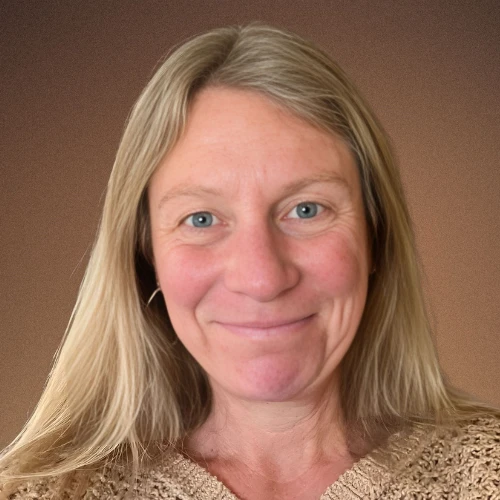
Jessica Schneider, Professional Genealogist
Jessica Schneider is a professional genealogist based in Minneapolis, Minnesota, serving families and attorneys nationwide. A member of the Association of Professional Genealogists and Vice President of its Colorado chapter, she specializes in heir search and estate research, Canadian citizenship by descent, tribal enrollment and Métis family history, and complex records research.
Read Jessica's full bioHave a research question like this one?
Schneider Genealogy helps families and attorneys nationwide get accurate, documented answers. Reach out for a consultation.