The Moment a Client Learns Something That Changes Everything
The moment a client learns something that changes everything usually arrives quietly. It is a name in a certified record that does not match the one on the family tree, a set of DNA matches that point to a father no one mentioned, or a birth registration that proves a beloved grandmother was adopted. The professional genealogist’s job in that moment is not to soften the truth or dramatize it. It is to present the documented finding clearly, explain exactly what the evidence does and does not prove, and give the client room to absorb something that may reorder how they understand their own family.
These discoveries fall across a wide range, from the joyful to the painful, and most of them are neither entirely one nor the other. A reunion with a lost branch of the family can arrive in the same report as a difficult revelation about how that branch became lost. This article explains what those discoveries actually look like, how often they surface, why they are surfacing more now than ever, and how a responsible professional handles them, before, during, and after the moment of disclosure.
What kinds of discoveries actually change everything?
The discoveries that reshape a family story tend to cluster into a handful of recognizable types, and understanding them in advance makes the moment less disorienting. Some are joyful: a living half-sibling, a birth parent found after decades, a heritage confirmed rather than merely rumored. Others are harder: a misattributed parent, a hidden adoption, an ethnicity that contradicts the family’s stated origins, or a painful chapter a previous generation worked to bury.
What unites them is that the paper trail, not the family lore, is doing the talking. Records preserve what people did, sometimes including what they chose never to say. A death certificate can name a birth mother a family never acknowledged. A probate file can reveal children from an earlier marriage. A church register can confirm a baptism that quietly contradicts a stated birth year. None of this is invented by the genealogist. It is recovered, and then it has to be delivered.
| Type of discovery | What typically surfaces it | Emotional weight |
|---|---|---|
| Reunion with living relatives | DNA matches, adoption records, city directories | Often joyful, sometimes complicated |
| Misattributed parentage | Autosomal DNA matches that break the expected line | Frequently destabilizing |
| Hidden adoption or foundling origin | Birth records, court files, orphanage or agency records | Mixed, often bittersweet |
| Unexpected ethnicity or heritage | DNA ethnicity estimates plus documentary confirmation | Ranges from affirming to unsettling |
| Buried family history | Newspapers, criminal or institutional records, probate | Usually difficult |
How common are the discoveries that upend a family story?
Life-altering findings are more common than most people assume, but far less common than sensational figures suggest. The most rigorous research places misattributed parentage in Western populations at roughly two percent, not the thirty percent figure that circulated for decades. Geneticists Turi King and Mark Jobling, whose work on surnames and the Y chromosome is widely cited, characterized that inflated thirty percent number as an urban myth and put the real rate at around two percent.
Direct-to-consumer testing has given us cleaner data. A survey of roughly 24,000 FamilyTreeDNA users found that about three percent reported discovering an unexpected biological parent, a figure consistent with the two percent population estimate. The picture changes sharply only when doubt already exists: among people who pursue paternity testing specifically because parentage is disputed, unexpected results run far higher, with studies reporting rates from seventeen to thirty-three percent. The lesson is that for the general public, a story-changing parentage discovery is uncommon in any single family, yet across the millions of people now testing, it happens constantly.
Why are these revelations surfacing now more than ever?
They are surfacing now because tens of millions of people have put their DNA into searchable databases, and those databases surface relatives whether or not anyone was looking for them. As of early 2026, AncestryDNA alone held close to 30 million kits, and the four major testing companies together account for well over 50 million, according to genealogy analyst The DNA Geek. At that scale, a match list is no longer a private inquiry. It is a standing connection to biological relatives who may appear without warning.
This is the central shift. Most people who take an ancestry test are curious about ethnicity percentages or building a tree, not investigating parentage. The revelation finds them. A close match labeled in a way that does not fit the expected family, a half-sibling who shares too much DNA to be a cousin, a parent’s kit that fails to match a child’s, these arrive unbidden. Because the discovery is often accidental, the emotional impact can be greater, which is exactly why peer-reviewed research now examines the mental health experience of people who receive unexpected “not parent expected” news from consumer DNA tests, published in BMC Psychiatry in 2024. The scale of testing has turned a rare private event into a recurring public one.
What does a professional genealogist owe a client before the discovery?
A professional owes the client honest preparation before any work begins, because the possibility of an unexpected finding is not a footnote, it is a foreseeable outcome. The Board for Certification of Genealogists’ Genealogist’s Code of Ethics is explicit on this point. Before collecting a DNA sample, a genealogist must explain to the person “the possibility and consequences of discovering unanticipated relatives, unknown medical conditions, unexpected ethnic backgrounds,” along with the privacy implications and how the data could be accessed. Informed consent means the client understood, in advance, that the research might change the story.
The same ethic governs how findings are reported. Under the Association of Professional Genealogists’ Code of Ethics, published July 1, 2024, a member commits to communicating genealogical work using evidence from reliable, fully cited sources “without withholding or knowingly misrepresenting sources or data.” That obligation cuts in one direction only. A genealogist does not get to hide a difficult finding because it is uncomfortable, and does not get to inflate a thin one because it is exciting. The client is entitled to the documented truth, framed accurately. Setting that expectation at the start is part of the professionalism, and it is why a careful practitioner raises the possibility of surprises during the very first conversation rather than in the final report.
How should a hard truth actually be delivered?
A hard truth is delivered the same way any finding is delivered, with the documentation attached and the interpretation kept honest, but with more care and more space. The genealogist’s role is to show the evidence, explain what it establishes, and distinguish clearly between what the records prove and what remains inference. A DNA match establishes a biological relationship within a range of possibilities. A birth certificate naming a different father establishes what was recorded, which is not always identical to biological fact. Precision protects the client from both false comfort and false alarm.
Delivery also means resisting two temptations: rushing the client past the finding, and editorializing about it. The record does not judge, and neither should the person presenting it. Practically, this looks like a written report that lays out sources and reasoning, a conversation that allows questions, and a willingness to sit with the client’s reaction without steering it. Some clients want every corroborating document. Others need time before they can look at any of it. A professional follows the client’s pace. When a discovery touches on living relatives, questions of who to contact and how belong to the client, not the researcher, and often benefit from the kind of careful sequencing discussed in what happens when the story wasn’t what you were told.
What happens after the moment?
After the moment, the work shifts from discovery to support and verification, and the genealogist’s steadiness matters as much as the finding did. A single surprising result is a lead, not a conclusion. Responsible practice means confirming it, testing additional matches, locating corroborating records, and ruling out simpler explanations before anyone acts on it. Many clients want to know not just that something is true, but how certain it is and what documents stand behind it, which is the difference between a hint and how DNA fits into professional genealogical research when it is done to a professional standard.
There is also a human aftermath the genealogist does not own but should anticipate. Discoveries about parentage, adoption, or hidden relatives can raise questions that belong to a counselor, a family, or a lawyer rather than a researcher. A good professional knows the edge of their role, stays inside it, and points the client toward appropriate support when the situation calls for it. What the genealogist can promise is that the finding is documented, sourced, and explained, so the client is building on solid ground rather than rumor.
Over time, many clients come to describe even the difficult discoveries as worth having. Clarity, however hard, tends to be steadier than a comfortable story that was never true. That is ultimately why this work matters, and why giving families back their stories is about more than names and dates. Every certified record represents a real life, and recovering those lives, accurately and honestly, has the power to change how the living understand their own place in the family. The moment that changes everything is not the genealogist’s to script. The responsibility is to make sure that when it arrives, it arrives true.
The Bottom Line
Life-changing genealogical discoveries, misattributed parentage, hidden adoptions, unexpected heritage, and reunions with living relatives, are surfacing constantly because more than 50 million people have placed their DNA in searchable databases, with AncestryDNA alone near 30 million kits. The findings themselves remain individually uncommon, misattributed parentage sits around two percent in Western populations, but at scale they reach people who never went looking. What separates a professional from a hobbyist is how the moment is handled: warning the client in advance that surprises are possible, as the Board for Certification of Genealogists requires before any DNA work, and reporting the result truthfully under the Association of Professional Genealogists' code, without withholding a hard truth or inflating a thin one. A single match is a lead, not a verdict, so the responsible practice is to confirm it with corroborating records, distinguish proof from inference, and follow the client's pace. Delivered that way, even a painful discovery tends to prove steadier than a comfortable story that was never true.
Sources
- Board for Certification of Genealogists: Ethics and Standards (Genealogist's Code of Ethics)
- Association of Professional Genealogists: Code of Ethics (published July 1, 2024)
- The DNA Geek: Database Sizes, March 2026
- BMC Psychiatry (2024): Psychosocial and mental health experience of learning 'Not Parent Expected' news from a DTC DNA test
- Non-paternity event: prevalence research overview (Wikipedia, citing King & Jobling)
Frequently Asked Questions
How often does DNA testing reveal an unexpected parent?
Will a professional genealogist warn me before starting that they might find something upsetting?
Can a genealogist hide or soften a difficult finding to protect me?
Why are family secrets coming out through DNA tests now?
Is a surprising DNA match proof that my family story is wrong?
What should I do emotionally if research uncovers something that changes my family story?
About the Author
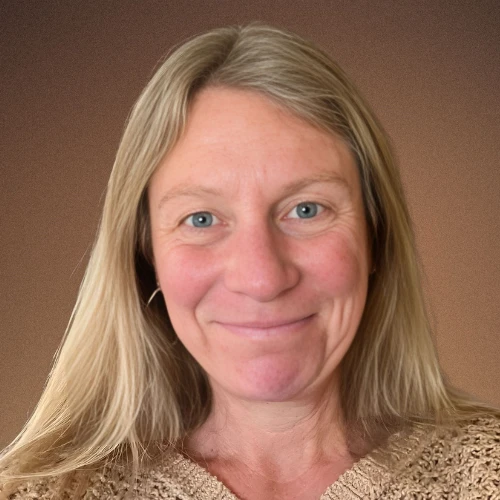
Jessica Schneider, Professional Genealogist
Jessica Schneider is a professional genealogist based in Minneapolis, Minnesota, serving families and attorneys nationwide. A member of the Association of Professional Genealogists and Vice President of its Colorado chapter, she specializes in heir search and estate research, Canadian citizenship by descent, tribal enrollment and Métis family history, and complex records research.
Read Jessica's full bioHave a research question like this one?
Schneider Genealogy helps families and attorneys nationwide get accurate, documented answers. Reach out for a consultation.